

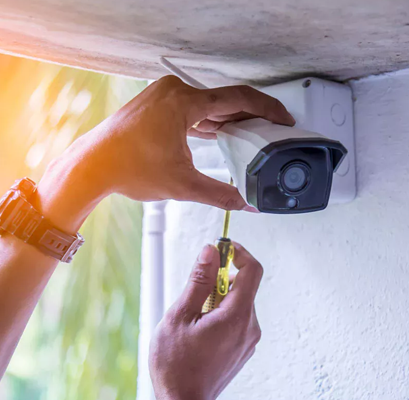
You bought great cameras, but are you seeing everything? Effective security camera placement is not about how many you have. It is about the camera placement angles you choose. A bad angle creates a perfect blind spot for trouble.
This applies everywhere, indoors and out. Good camera positioning for maximum coverage is the real secret. Forget guesswork. We will show you ten angles used by pros to make sure your system actually works for you.
These tips work for any setup. Whether you are doing a simple install home security camera job or a full wired security camera installation, start here. Let’s get your angles right.
Before You Start: Camera Placement Basics
Alright, before we get to the good stuff with all those angles, let’s cover a few simple ground rules.
First up, height. Almost every camera you install should be about head-height for a tall person, let’s say 8 to 10 feet up. This stops someone from easily swatting it away while still letting it see faces clearly. Next, remember that every camera has a limit to its side-to-side vision, called its field of view. A super-wide lens might see your whole backyard, but your dog might look like a tiny speck.
Now, cables or no cables? A wireless security camera installation is easier for moving things around to find the perfect spot, but you’ve got to make sure your Wi-Fi reaches out there strong. Going with a wired security camera installation means more reliable power and video, but you’ll need to think about hiding those wires.
Angle #1: The Downward Front Door Angle (Face Capture Angle)
You know that feeling when you get a delivery notification, but the video only shows the top of someone’s hat? That’s what we’re fixing right now. For your front door, the best camera angles for security point slightly down. This setup is all about getting a clear shot of anyone at your door. Instead of mounting it straight-on where you mainly see foreheads, you tilt it down to capture the full face.
You’ll want to use this above your main front door, under the eave if you have one, or next to a porch aimed right at the doorstep. Mount the camera about 9 feet high. The trick is to not point it straight out, but to tilt the lens down so it’s looking at the spot where a person would stand to ring your bell. Honestly, this tilt is what is the best angle for a security camera for your main entry. Just avoid mounting it so high you only see scalps, or pointing it right at a bright wall that washes everything out.
Angle #2: The 45-Degree Corner Angle (Room Coverage Angle)
Now, for looking inside your home. If you want to eliminate blind spots in a living room or kitchen, the corner is your best friend. While installing security cameras outside home, mount a camera high up in a corner, angled down at about 45 degrees across the room. This gives you a wide “V” view that catches movement in almost the entire space, which is the smartest camera positioning for maximum coverage for most rooms. It’s perfect for main living areas or any place with multiple entry points. Avoid pointing it directly at a window, or you’ll just get a bright, blown-out square during the day.
Angle #3: The Driveway Depth Angle
Let’s move outside. For your driveway, you want to capture cars coming in and, more importantly, their license plates. This requires a different outdoor security camera placement. Mount the camera on your house, pointed down the length of the driveway, not straight across it. This “depth” view shows the direction of travel and, with a good camera, captures plate details as a vehicle pauses near the garage. This smart CCTV camera angles for visibility helps with evidence. Remember our tip about glare? Make sure the lens isn’t facing the rising or setting sun to avoid a washed-out video.
Angle #4: The Side & Back Door Cross-Angle
Side and back doors are favorite entries for intruders. A direct, head-on view here is easy to spot and avoid. Instead, use a smarter placement of security cameras. Mount your camera on a wall adjacent to the door, not above it. Angle it across the doorway and the approach path. This “cross-angle” covers more ground and makes it harder for someone to hide their face from the lens. It’s a prime example of where to angle cameras for maximum visibility for secondary entrances. This creates a wider field of view from a less obvious spot.
Angle #5: The Staircase Choke-Point Angle
Stairs are natural funnels; everyone has to use them. This makes a staircase a perfect “choke-point” for monitoring movement between floors. For this, think about your camera mounting angles. Place the camera at the top of the stairs, mounted on the wall (not the railing), angled to look down the flight. This captures anyone coming up or going down full-on. It provides incredibly high-value footage because it’s an area that can’t be bypassed. It’s a simple but highly effective part of any solid cctv camera placement guidelines.
Angle #6: The Hallway Compression Angle
Similar to stairs, a long hallway forces anyone to walk right through the camera’s view. The goal here is to “compress” their path so you get a clear, full-body shot. The key to how to angle security cameras correctly in a hallway is to mount it at one end, about 7-8 feet high, pointing straight down the hall’s length. This eliminates side-to-side dodging and ensures you see their whole approach. It’s ideal for main interior hallways leading to bedrooms. This is a core strategy for camera placement for home security inside your walls.
Angle #7: The Backyard Perimeter Sweep Angle
For a big backyard, you want an early warning system. The goal isn’t to see a bug on a leaf, but to spot a person approaching your house from the tree line. This is where a thoughtful outdoor security camera placement shines. Use a camera with a wide view (but not a fisheye that distorts everything) and mount it on the back of your house. Angle it to “sweep” across the farthest boundary of your yard you care about. This wide camera positioning for maximum coverage gives you time to react before someone reaches your patio or back door. It’s about seeing the big picture first.
Angle #8: The Garage & Tool Area Angle
Your garage holds cars, tools, and bikes—big-ticket items. To properly install a security camera here, don’t just point it at the garage door from inside. That misses the corners. Instead, mount it high on a side wall, angled diagonally across the space. This one view can cover the vehicle, the workbench, and the door to your house. If your garage is detached and Wi-Fi is weak, this might be a great spot for that wired security camera installation we talked about, ensuring a rock-solid connection for critical footage.
Angle #9: The Overlapping Coverage Angle (Redundancy Angle)
Here’s a pro move: make your cameras watch each other’s backs. The idea is to use security camera placement angles so that the view from one camera includes another camera in its frame. This creates overlapping coverage. If a thief tries to disable one camera, the act is recorded by its neighbor. It’s the ultimate strategy to eliminate blind spots created by sabotage. Think of positioning one driveway camera so it can see your front door camera, or having two backyard cameras with intersecting views. It’s about building a team, not placing lone sentries.
Angle #10: The Tamper-Resistant High-Mount Angle
Finally, let’s protect the cameras themselves. For spots easily reached—like a ground-floor wall or a fence—use this angle. Mount the camera very high, under a soffit or on a tall pole, and angle it steeply down onto the area you need to watch. This keeps it out of easy reach while still providing coverage. It’s a key camera mounting angles strategy for deterrence. It also naturally leads us to a vital shortlist of where not to install security cameras, like in easily accessible spots where they can be quickly smacked or sprayed with paint.
Where NOT to Angle Security Cameras
Getting your angles right also means knowing exactly where to avoid pointing your camera. It’s not just about a bad picture; it’s about respect, privacy, and staying out of legal trouble. Here are the key spots to skip.
- Into a Neighbor’s Property: Aiming at their yard, windows, or doors is a surefire way to start a serious dispute.
- Directly at the Sun: This will give you a glaring, washed-out video every sunrise or sunset, rendering the footage useless.
- Through a Window from Inside: The glass will confuse the motion sensor and cause the night vision to reflect back, creating a white blur.
- Inside Bathrooms or Bedrooms: These are private spaces. Placing a camera here is a major violation of trust and often illegal.
Knowing where not to install security cameras is just as crucial as knowing where to put them for a setup that’s both effective and ethical.
Your Blueprint for Better Security
So, that’s the blueprint. By moving beyond simple mounting and focusing on these ten strategic angles, you transform your cameras from passive recorders into an active, intelligent security net. You now know how to capture clear faces, monitor key approaches, and eliminate those frustrating blind spots, all without needing a single extra camera.
If you’d rather have this expertise handled from the start, that’s where we come in. At SafeZone, we specialize in professional Security Camera Installation. Our experienced technicians ensure every camera is positioned with precision, giving you peace of mind that every corner is covered. For a setup installed right the first time, call us at 17182183838 or visit https://safezone.nyc/security-camera-installation/ to learn more.
